We use cookies to measure traffic and to show relevant advertising. Nothing is stored or sent until you choose, and you can change your choice at any time.
"How many desiccant bags does a 20ft or 40ft container need?" is the question we get more than any other from importers shipping to the Gulf. There is no fixed answer — the right amount depends on the cargo, the voyage, the season and the climate at the destination port. This guide gives you the calculation to work from, reference quantities, and the few specification points that decide whether your moisture protection actually works.
Desiccant only protects cargo if it absorbs moisture faster than the cargo and the container release it. The capacity you need therefore comes down to three variables:
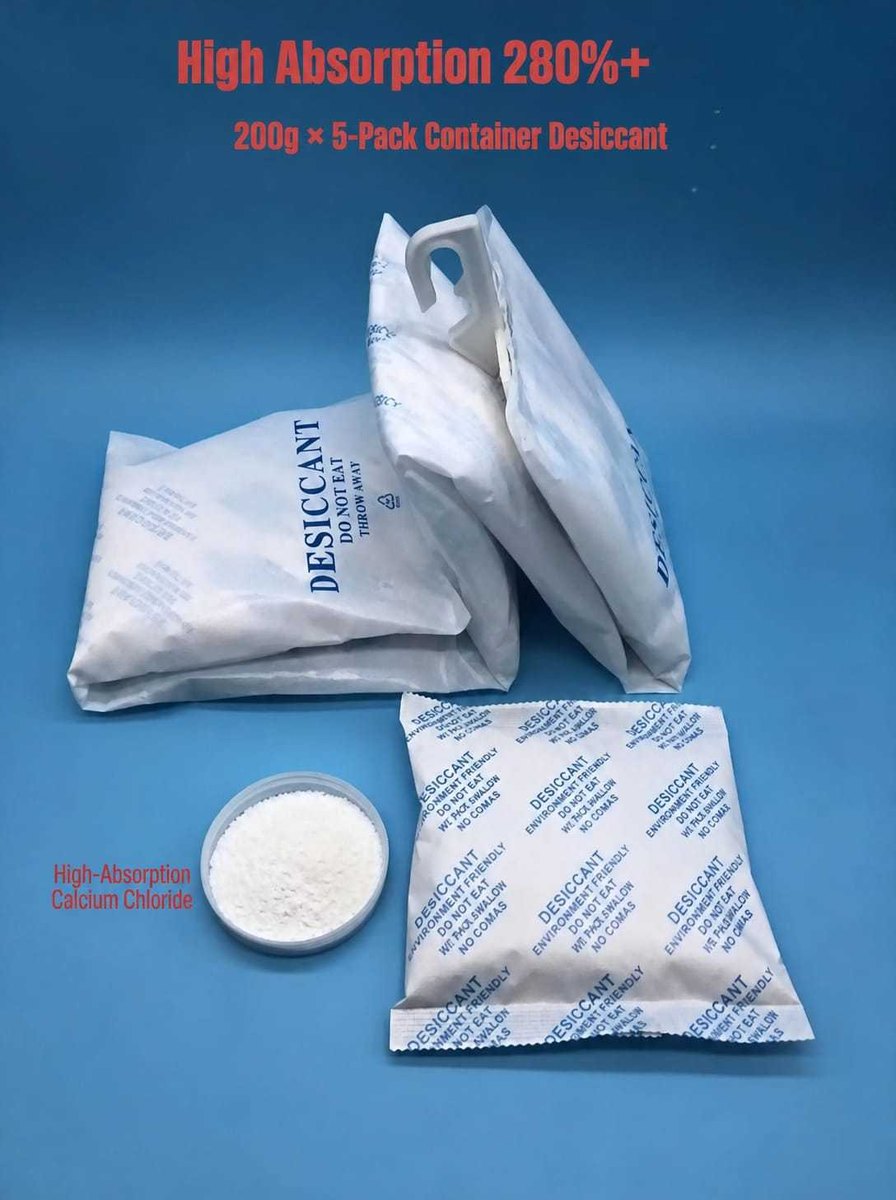
For a well-specified calcium chloride container desiccant the industry rule of thumb is 1 kg per 2–4 m³ of container air, which is why our own calcium chloride packs run five 200 g sections to the kilo. That figure suits a standard voyage, but in real operation the cargo's own moisture load often dominates — which is why we recommend sizing by cargo, not by container volume alone.
One thing worth stating first: calcium chloride absorbs twice its own weight in water under ideal conditions, but ideal is all that is. In practice the physical limits of the box apply too, and our own measurements put a calcium chloride strip at roughly 140–180% of its own weight by the end of a voyage.
The table gives practical starting quantities for calcium chloride container desiccant, the standard choice for ocean freight. Use it as a baseline, then adjust for voyage length, cargo type and the humidity and temperature swing in the box.
| Container | Internal Volume | General Cargo (reference) | Hygroscopic Cargo (reference) |
|---|---|---|---|
| 20ft (standard) | ~33 m³ | 6–10 units of 1 kg | 10–16 units of 1 kg |
| 40ft (standard) | ~67 m³ | 12–20 units of 1 kg | 20–32 units of 1 kg |
| 40ft High Cube | ~76 m³ | 14–22 units of 1 kg | 22–36 units of 1 kg |
These numbers assume a typical 20–30 day voyage in temperate-to-tropical conditions. For peak-season arrivals in the Gulf (June–September), or for very damp cargo such as green timber or leather, take the top of the range or go above it. They also assume a full container you control; consolidated LCL cargo needs a separate calculation.
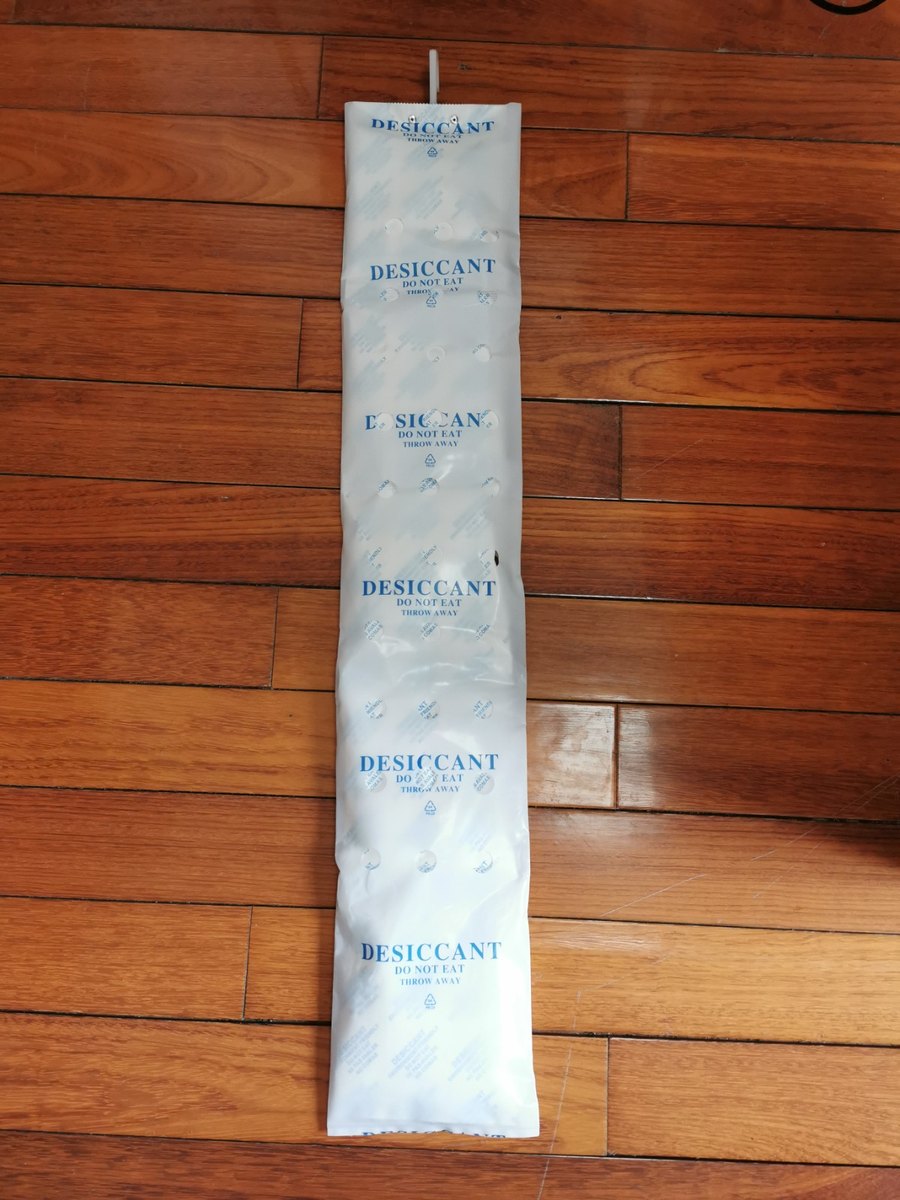
To build a specification that stands up, estimate the total water load first and then match it against desiccant capacity:
Piling all the desiccant in one corner will not protect a container. To do any work it has to be spread out, acting on the air where condensation actually forms:

For container shipping, calcium chloride is the default: high capacity, and it keeps absorbing even at high relative humidity. Silica gel suits sealed packaging (electronics, pharmaceuticals, food) where humidity is moderate and the pack is airtight. Many exporters use both — sachets inside the cartons, container desiccant on the walls — as layered protection.
Tell us the container size, cargo type, weight and destination port, and we will work out the exact number of units for that cargo, that weight and that destination.
Send the cargo, container size and destination port and we will come back with the unit count and a price.